17 Nov 2026
Weather Anomalies and Their Role in Reshaping Goal Expectation Models for Northern Division Encounters

Northern division encounters have seen increased scrutiny of goal expectation models as weather anomalies alter pitch conditions, player movement, and scoring rates across leagues in Scotland, Norway, and Sweden. Data from meteorological records show that deviations in temperature, precipitation, and wind patterns disrupt standard assumptions built into expected goals calculations, which traditionally rely on historical averages from milder seasons.
Shifts in Playing Surfaces and Ball Behavior
Heavy rainfall combined with sudden freezes creates surfaces where the ball travels slower yet bounces unpredictably, while strong winds push shots off target more frequently. Researchers at the University of Oslo documented these effects in matches played between 2018 and 2024, noting that total shots on target dropped by an average of 12 percent during periods of sustained wind speeds above 25 kilometers per hour. Goal expectation models adjust by incorporating variables for surface friction and wind vector data, yet anomalies such as unseasonal November downpours continue to challenge the accuracy of those adjustments.
Impact on Player Performance Metrics
Players in northern divisions cover fewer high-intensity meters when temperatures fall below seasonal norms or when visibility decreases due to fog and sleet. Studies from the Norwegian Institute of Public Health link these conditions to measurable declines in passing accuracy and shot conversion rates. Models that once projected 2.8 expected goals per match in comparable fixtures now require recalibration when anomalies persist, because fatigue accumulates faster under adverse weather. Observers note that teams adapt formations toward more direct play, which in turn modifies the underlying probabilities used in predictive frameworks.
Recalibrating Expectation Models with Real-Time Data
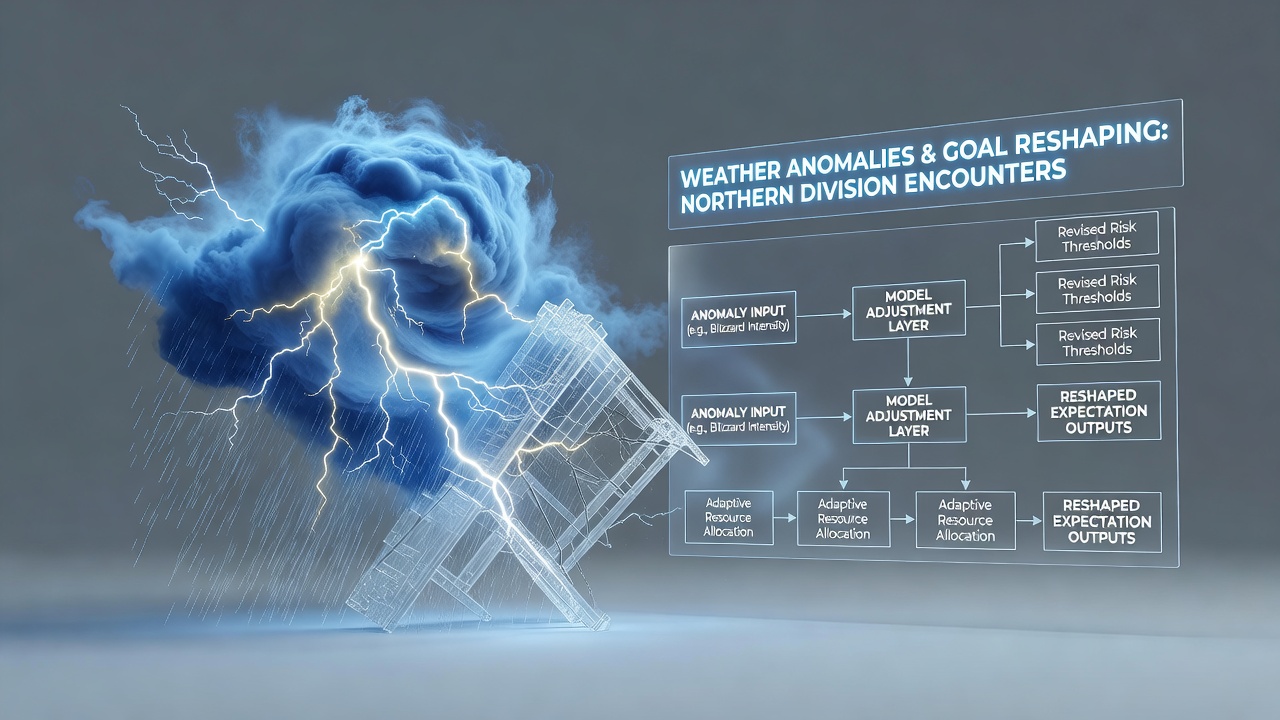
Analysts integrate satellite observations and ground sensors to update goal expectation models during active anomalies, rather than relying solely on pre-season baselines. The National Oceanic and Atmospheric Administration supplies temperature and precipitation datasets that feed into these revisions, allowing statisticians to weight recent northern division results more heavily when anomalies appear. During November 2026, early reports indicate elevated precipitation levels across parts of Scandinavia that already deviate from long-term averages, prompting modelers to apply dynamic coefficients for expected goals in affected fixtures.
Case Examples from Recent Seasons
One study revealed that a sequence of three consecutive matches in Oslo during atypical November conditions produced 1.4 goals per game instead of the modeled 2.6, because persistent rain reduced effective playing time and limited crossing opportunities. Similar patterns emerged in Swedish Allsvenskan games where wind gusts altered set-piece outcomes. Those who track these encounters observe that defensive organizations tighten under such conditions, shifting the distribution of scoring opportunities away from open-play situations that standard models emphasize.
Integration of Meteorological Variables
Goal expectation frameworks now incorporate parameters for barometric pressure changes and humidity levels, because these factors influence both ball flight and player endurance. Australian Bureau of Meteorology reports on comparable southern hemisphere anomalies demonstrate parallel effects, confirming that weather data from multiple regions strengthen the robustness of northern models. Teams and analysts cross-reference these inputs with match footage to refine probability estimates before each round.
Future Adjustments and Model Evolution
Continued monitoring of anomaly frequency helps statisticians determine whether permanent weighting factors belong in goal expectation calculations or whether seasonal resets remain sufficient. Evidence suggests that northern divisions experience these disruptions more often than southern counterparts, which accelerates the adoption of hybrid models blending traditional statistics with live environmental readings.
Conclusion
Weather anomalies continue to reshape goal expectation models for northern division encounters through direct effects on surfaces, player output, and scoring patterns. Updated data streams from agencies such as the National Oceanic and Atmospheric Administration support ongoing refinements, while case studies from leagues in Norway and Sweden illustrate the practical consequences. As anomalies persist into periods like November 2026, those maintaining these models rely on integrated meteorological inputs to maintain predictive accuracy across evolving conditions.