22 Sep 2026
Seasonal Pitch Condition Shifts and Their Effects on Total Goals Markets
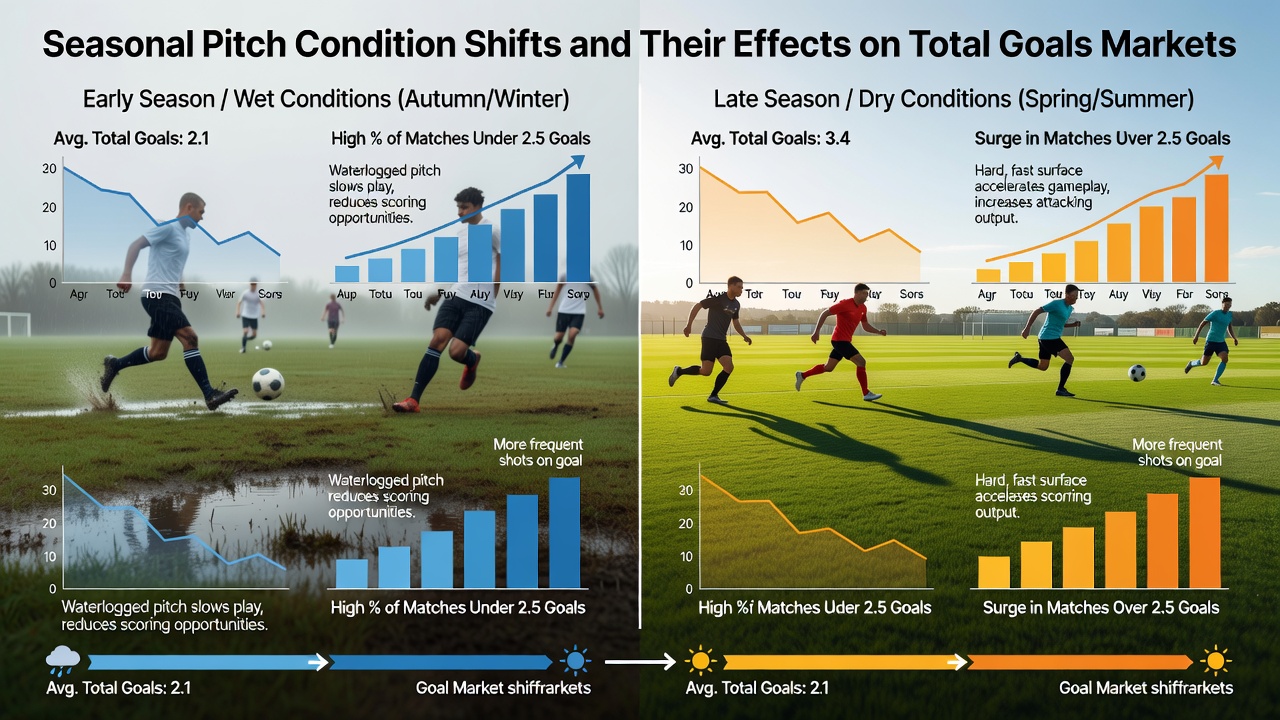
Seasonal shifts in pitch conditions alter how matches unfold across leagues, and analysts track these changes closely because they influence the number of goals scored in any given fixture. Groundskeepers manage grass length, drainage systems, and aeration schedules that respond to temperature, rainfall, and sunlight hours, while league schedules stretch from late summer through spring. Data collected by competition organizers shows that total goals markets respond to these variables because ball speed, player traction, and passing accuracy all adjust when surfaces harden or soften.
How Pitch Surfaces Evolve Through the Calendar Year
Early season pitches in August and September typically feature dense, even grass that has recovered from summer maintenance, yet September 2026 fixtures already displayed regional differences as northern European venues experienced heavier rainfall compared with southern counterparts. Grounds teams in the Bundesliga and Serie A report that September downpours increase surface moisture retention, which slows ball roll and reduces long-range passing options. Observers note that teams relying on high-pressing styles encounter more slips and miscontrols on these surfaces, leading to fewer transitions and lower shot volumes.
By mid-winter, repeated freeze-thaw cycles and heavy use create uneven patches, especially in leagues that maintain natural grass without hybrid reinforcement. Studies conducted by sports science departments at universities in Germany and Canada indicate that pitch hardness measurements drop measurably between October and February, correlating with a measurable decline in average goals per game across multiple seasons. Those findings align with match data released by league statisticians who record shot locations and completion rates under varying turf conditions.
Measured Effects on Goal Scoring Patterns
Lower ball speeds on soft, wet pitches reduce the effectiveness of through balls and long switches, which in turn decreases entries into the penalty area. Researchers tracking UEFA club competitions found that matches played on pitches rated below a certain firmness threshold produced 0.4 fewer goals per game on average than fixtures on firmer surfaces. The same datasets reveal that set-piece goals become proportionally more significant when open-play chances diminish, because dead-ball situations bypass some of the traction issues players face during sustained build-up.
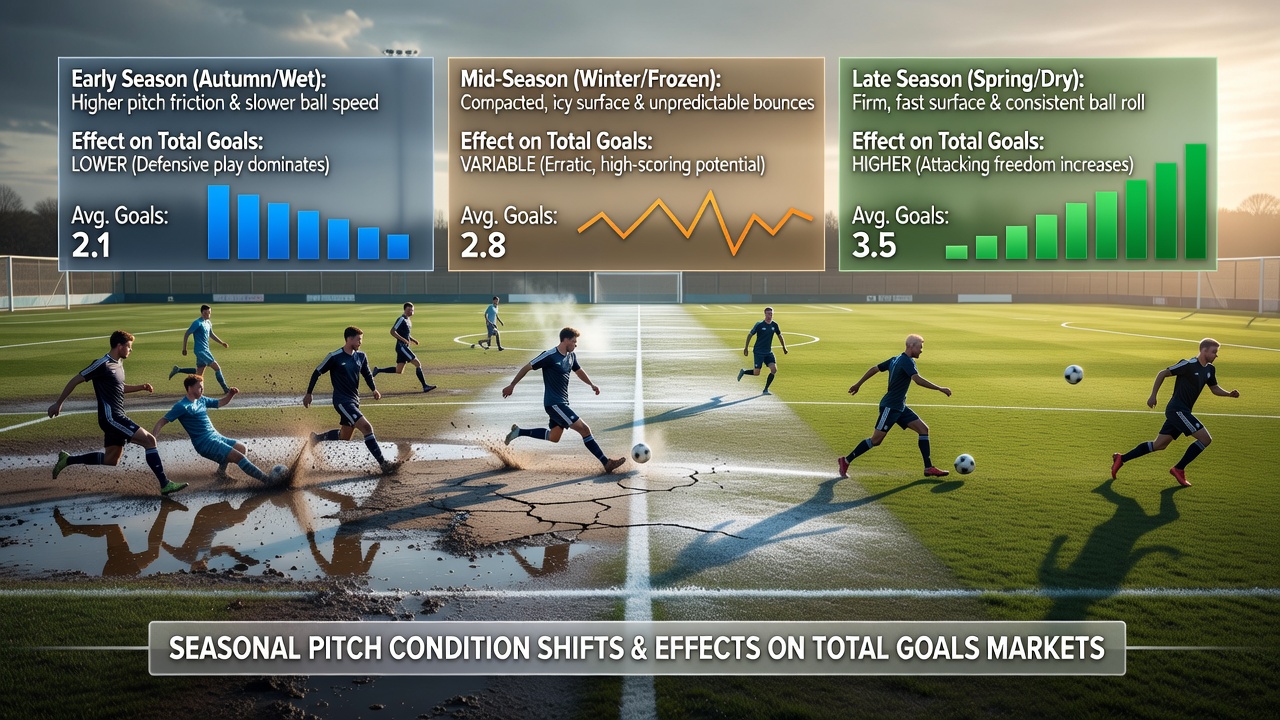
Conversely, pitches that remain dry and firm into late autumn allow quicker one-touch combinations and more shots from distance. Australian Institute of Sport reports on similar surface variables in domestic competitions demonstrate that increased friction on drier grass leads to higher pass completion percentages in midfield zones, which supports sustained pressure and elevates expected goal values. League tables compiled over five-year spans confirm that total goals markets expand during periods when grounds crews prioritize speed over durability.
Market Implications for Totals Betting
Betting exchanges and odds compilers incorporate historical pitch data when they set totals lines for upcoming rounds. Figures released by European gaming associations show that lines for winter fixtures often sit 0.25 goals lower than equivalent summer or early-autumn matches within the same leagues. Traders adjust these numbers after reviewing rainfall forecasts, temperature projections, and recent ground reports because even modest changes in surface quality shift probability distributions for over/under outcomes.
Analysts who model these variables combine satellite weather readings with venue-specific maintenance logs to refine projections. One study published by a Swedish research institute examined 1,200 matches across Scandinavia and the Baltic states and determined that total goals markets underestimated scoring when temperatures stayed above seasonal norms and pitches stayed firmer than expected. The reverse pattern appeared in matches affected by sudden cold snaps that left surfaces harder and more unpredictable.
Regional Differences and League-Specific Responses
Leagues in northern latitudes schedule more fixtures on hybrid pitches that blend natural grass with synthetic fibers, which maintain consistent hardness longer into the season. Data from the Dutch Eredivisie indicates these surfaces produce goal averages closer to early-season levels even during December and January. In contrast, southern European competitions that rely more heavily on natural grass experience sharper drops in scoring when winter rainfall exceeds long-term averages, because drainage systems face greater stress.
Coaching staffs adapt tactics accordingly. Teams that favor wide play and crossing often see reduced returns on softer pitches, while sides built around compact midfield pressing maintain higher shot volumes regardless of surface. Match reports filed by competition statisticians record these tactical adjustments through changes in pass maps and touch locations, providing additional inputs for totals market models.
Conclusion
Seasonal pitch condition shifts create measurable, recurring effects on total goals markets because surface variables directly influence ball movement, player movement, and chance creation. Competition data, academic studies, and venue maintenance records supply the evidence that odds compilers and analysts use to adjust lines throughout the year. As leagues continue to publish granular pitch metrics and weather services improve forecast resolution, models that connect these factors to scoring outcomes become more precise, allowing markets to reflect actual playing conditions rather than static historical averages.