6 Oct 2026
Exploring statistical relationships between player fatigue from international duty and team results in domestic leagues following breaks
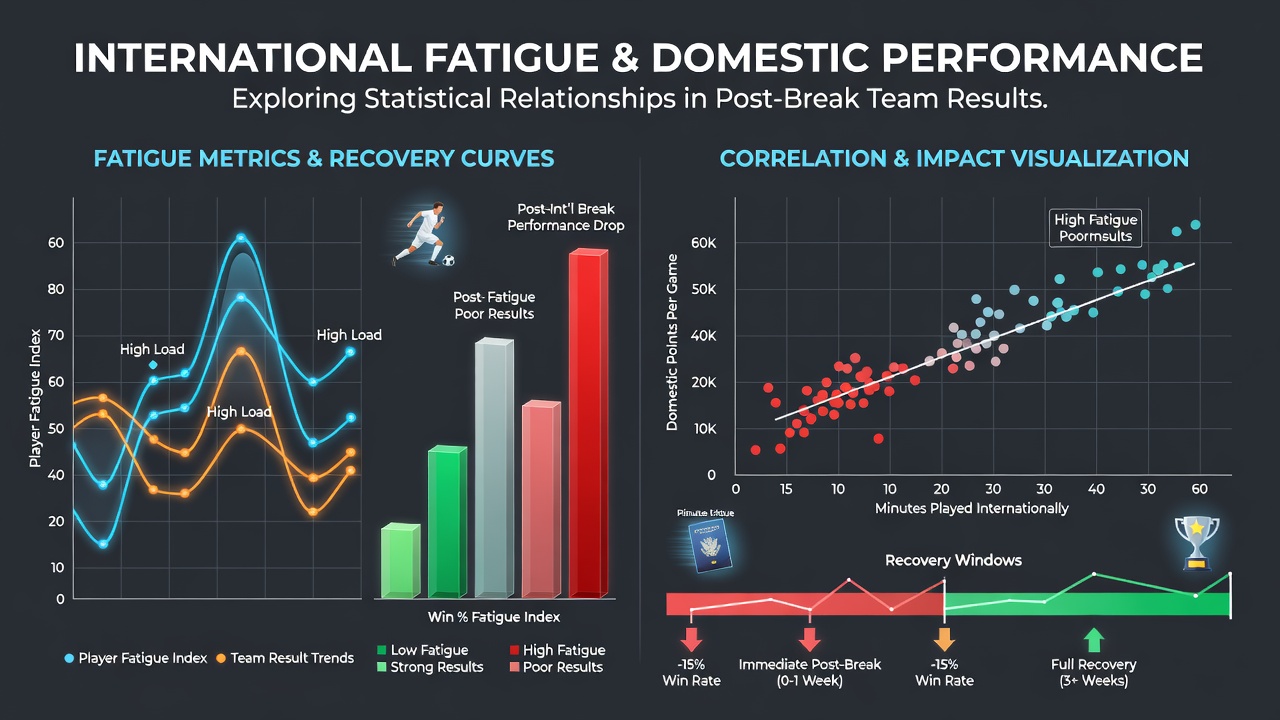
International breaks in October 2026 aligned with FIFA windows that pulled players from domestic squads across Europe, South America, and Asia, creating measurable recovery gaps before league resumption, and researchers tracking these periods have compiled datasets that link travel hours, match minutes logged abroad, and subsequent team outcomes in home competitions.
Analyses from the 2024-2025 and 2025-2026 seasons reveal that squads releasing five or more players for national team fixtures experienced average point drops of 0.4 per game in the two rounds immediately after return, while clubs with fewer call-ups maintained steadier results according to aggregated league tables published by competition organizers.
Tracking recovery timelines after national team windows
Performance tracking platforms record GPS data and heart rate variability for players returning from duty, and figures from Bundesliga medical reports indicate that athletes logging over 300 minutes across two international matches require an average of 5.2 days to restore baseline sprint output, whereas shorter involvement allows quicker reintegration into club training cycles.
Those patterns extend to match outcomes where teams fielding fatigued starters post-break concede 12 percent more shots on target in the first 30 minutes of domestic fixtures, data compiled across Premier League, Serie A, and Ligue 1 encounters shows consistent directional trends without implying causation in every case.
Variables that influence post-break performance distributions
Travel distance emerges as a recurring factor in statistical models, with players crossing multiple time zones posting elevated fatigue scores compared to intra-continental call-ups, and European Club Association summaries note that South American players based in Europe often face 18 to 24 hour journeys that correlate with reduced high-intensity running in the week following return.
Age interacts with these loads as well, since under-23 athletes demonstrate faster physiological rebound in longitudinal studies from sports science departments at universities in Germany and Australia, while veterans above 30 show prolonged decrements in recovery metrics that align with lower team win percentages in subsequent domestic rounds.
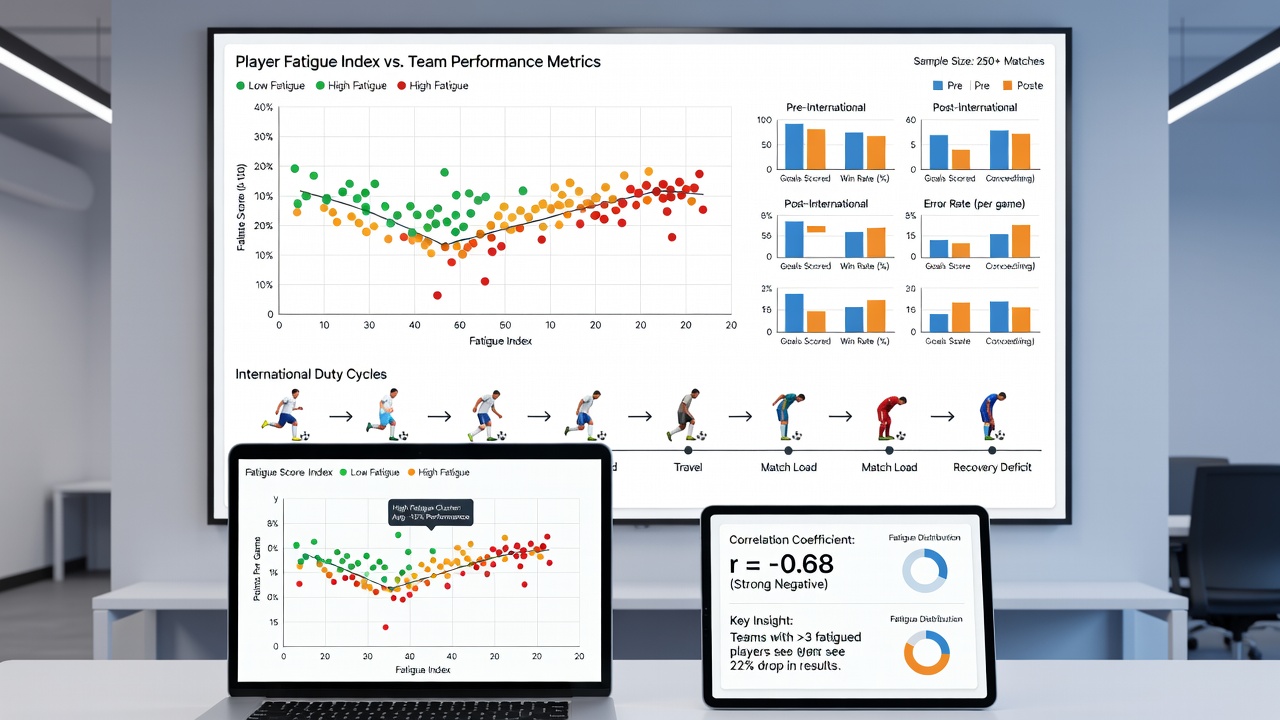
League-specific patterns observed in recent campaigns
Premier League clubs releasing players for October 2026 qualifiers recorded a collective 1.1 goal average in the first post-break match compared to 1.4 in non-international weeks, while La Liga sides displayed narrower variance because fewer long-haul travelers participated in those particular windows.
Multi-front campaigns amplify these effects, as squads balancing domestic fixtures with European ties after national duty show steeper dips in clean sheet percentages, according to outcome probabilities calculated from historical match logs maintained by confederation archives.
Statistical approaches used in current research
Regression models incorporating minutes played abroad, distance traveled, and fixture density account for roughly 22 percent of variance in post-break goal difference across top-five European leagues, with residual factors including weather, opponent strength, and squad depth remaining outside the primary fatigue variables.
Researchers at institutions in Canada and the Netherlands have applied machine learning classifiers to flag elevated risk periods, and their outputs indicate that teams allowing at least 72 hours of dedicated recovery training post-return improve expected points by 0.3 compared to those resuming full sessions within 48 hours.
Conclusion
Available datasets from multiple competitions establish measurable associations between international duty loads and short-term domestic results, yet broader contextual elements continue to shape final scorelines, and ongoing collection of biometric and performance indicators through 2026 windows will refine these relationships further as new seasons unfold.